
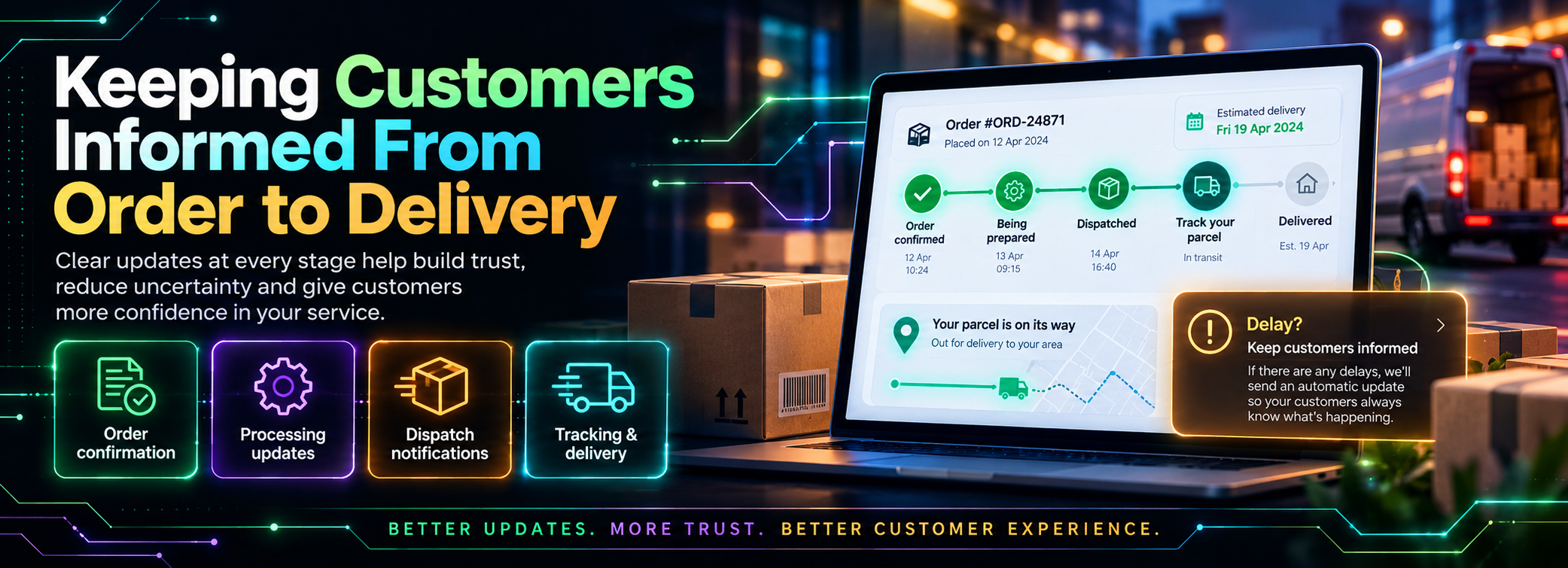
Getting a customer to complete a purchase is an important part of any ecommerce business, but the customer experience doesn’t end when they click the checkout button.
What happens between placing an order and receiving their products can have a significant impact on customer satisfaction, trust and whether they choose to buy from you again.
Customers want to know that their order has been received, when it is being processed, when it has been dispatched and when they can expect it to arrive. Providing clear and timely communication throughout this process can make a real difference to the overall shopping experience.
Order Confirmation Emails
The first communication a customer should receive after completing a purchase is an order confirmation email.
This provides reassurance that their order has been successfully placed and that payment has been received or authorised.
A good order confirmation email should include:
- Order number and date
- Details of the products purchased
- Quantities and prices
- Delivery address and selected delivery method
- Estimated delivery timescale
- Contact information should the customer have any questions
This information allows customers to check their order details and gives them a reference should they need to contact you.
Confirmation emails should be sent automatically and immediately after an order has been successfully placed. Customers shouldn’t have to wonder whether their purchase has gone through.
Keeping Customers Updated During Processing
Depending on the products being sold, there may be a period between receiving an order and dispatching it.
For businesses selling products that require preparation, assembly, personalisation or sourcing from suppliers, this period can sometimes be several days.
Keeping customers informed during this stage helps manage expectations and reduces the likelihood of them contacting you to ask about their order.
A simple email confirming that their order is being processed can provide reassurance that everything is progressing as expected.
For orders with longer processing times, additional updates can be particularly useful.
The important thing is to communicate at the right stages rather than sending unnecessary emails that provide little value.
Dispatch Notifications
One of the most important updates a customer receives is confirmation that their order has been dispatched.
At this point, customers know that their products are on the way and can start planning for delivery.
A dispatch notification should ideally include:
- Confirmation that the order has been dispatched
- The delivery company being used
- A tracking number or tracking link, where available
- An estimated delivery date
- Information about what to do if there is a delivery problem
Automating dispatch notifications through your ecommerce platform can save considerable administration time while ensuring customers receive consistent information.
It also reduces the need for customers to contact your business asking whether their order has been sent.
Providing Tracking Information
Where possible, providing customers with a tracking link is one of the simplest ways to improve the delivery experience.
Rather than contacting your business for updates, customers can check the progress of their delivery directly with the courier.
Tracking information can help customers see when their parcel has been collected, where it is in the delivery network and when it is expected to arrive.
For businesses sending multiple parcels or larger orders, providing individual tracking references can be particularly helpful.
Integrating courier tracking information into your ecommerce website or automated emails can make this process easier for both customers and your team.
Setting Realistic Delivery Expectations
One of the biggest causes of customer frustration is being given a delivery date that isn’t achievable.
Customers are generally more understanding of longer delivery times when they know what to expect before placing an order.
Delivery information should be clearly displayed on product pages, during checkout and within order confirmation emails.
If a product is available for immediate dispatch, make this clear. Equally, if an item requires additional processing time or is being ordered from a supplier, customers should be informed before completing their purchase.
It’s also important to distinguish between dispatch times and delivery times.
For example, stating that an order will be dispatched within two working days is not the same as promising delivery within two working days.
Being clear about these differences helps avoid confusion and disappointment.
Dealing With Delivery Delays
Even with the best systems in place, delays can happen.
Courier problems, supplier issues, unexpected demand and stock shortages can all affect delivery times.
What matters is how your business communicates these problems.
If you become aware that an order is going to be delayed, customers should be informed as soon as possible rather than waiting for them to contact you.
A good delay notification should explain:
- That the order has been delayed
- The reason for the delay, where known
- A revised delivery estimate, if available
- What action is being taken
- How the customer can contact you for further assistance
If a new delivery date cannot be confirmed, it’s better to explain this and provide another update when more information becomes available than to promise a date that may not be achievable.
Being proactive and transparent can help maintain customer confidence, even when things don’t go according to plan.
Using Automation to Improve Communication
Most modern ecommerce platforms, including OpenCart, WooCommerce and Shopify, provide options for automating order-related communications.
Depending on the platform and its configuration, these can include order confirmations, status changes, dispatch notifications and courier tracking information.
Additional functionality can also be developed or integrated to provide more detailed updates based on individual business requirements.
Automation helps ensure customers receive the right information at the right time without relying on staff to manually send every update.
However, it’s important to review the content of automated emails regularly to make sure the information is accurate, clearly presented and reflects your business.
An automated email containing incorrect delivery information can create more problems than it solves.
Better Communication Encourages Repeat Business
Keeping customers informed throughout the order and delivery process is about more than reducing customer enquiries.
It’s an important part of building trust and delivering a positive customer experience.
Customers who feel informed and confident about their purchase are more likely to have a positive impression of your business, even before their products arrive.
Clear communication can also reduce unnecessary support requests, improve customer satisfaction and encourage customers to return for future purchases.
Final Thoughts
A successful ecommerce website shouldn’t just make it easy for customers to place an order. It should also provide a clear and reliable experience from checkout through to delivery.
Order confirmations, processing updates, dispatch notifications, tracking information and realistic delivery expectations all play an important role.
And when problems occur, keeping customers informed rather than leaving them wondering can make a significant difference.
Good communication throughout the order process helps build customer confidence, reduces uncertainty and gives customers another reason to buy from you again.
